

Leadership Spotlight: Dr. Ibrahima Socé Fall Takes Helm at Institut Pasteur de Dakar

AMedRA warmly congratulates Dr. Ibrahima Socé Fall on his appointment as the new Director General of the Institut Pasteur de Dakar, effective July 1, 2025. A globally respected leader in infectious disease control and global health strategy, Dr. Fall brings decades of experience from the World Health Organization and beyond.
His leadership promises to strengthen African-led research, public health innovation, and scientific diplomacy.
Spotlight on Recent Publications
Two Major Papers from AMedRA Researchers Highlight Urgent Health Challenges
AMedRA is proud to share two significant publications advancing the understanding of cardiovascular health in Africa:
- Circulation Research (American Heart Association)
Our recent study reveals hypertension is surging in sub-Saharan Africa. Despite this rise, detection, treatment, and control rates remain worryingly low. A major reason is the over-reliance on data from African diaspora populations rather than native SSA communities.
“ We urgently need contextualized mechanistic research and coordinated, multisectoral strategies — from better food policies and health education to tailored treatment approaches and task shifting.”
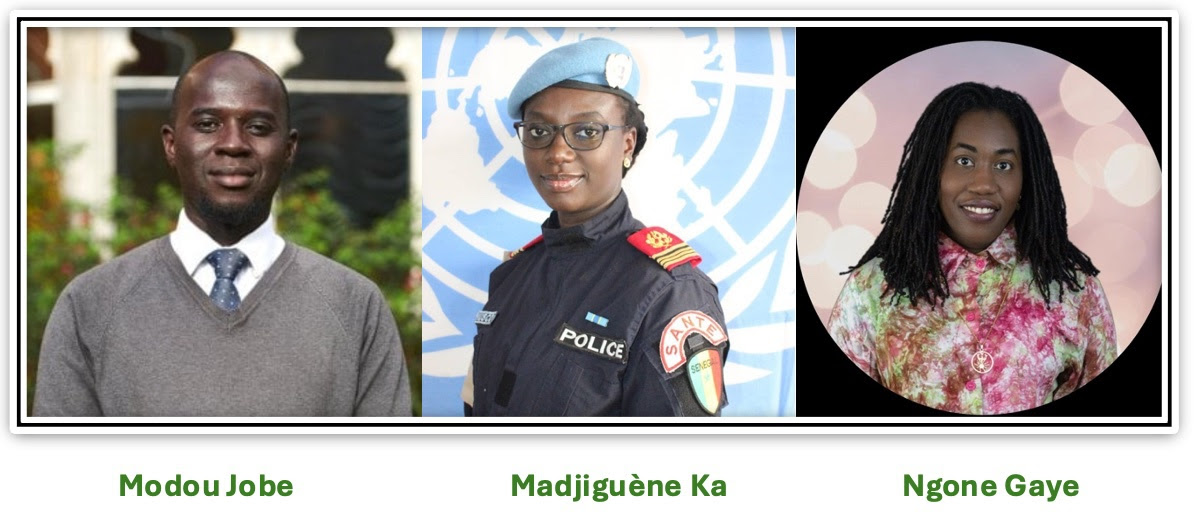
Congratulations to all the authors: Modou Jobe, Serigne Mor Beye, Ngone Diaba Gaye, Mame Madjiguene Ka, Pablo Perel, Alexander D. Perkins, Adama Kane, Andrew M. Prentice, Dike B. Ojji, Lamin E.S. Jaiteh, Anthony O. Etyang, Anoop S.V. Shah, and Bamba Gaye .
Read Circulation Research paper here ➔
- BMJ Open
This study examines trends in the age-standardised prevalence of cardiometabolic risk factors in Senegal between 1975 and 2021, disaggregated by sex, using data from the WHO Inequality Data Repository.
Study show that though the tobacco use has declined, but overweight/obesity and diabetes have nearly doubled. Hypertension rose over the years, peaking in both sexes before declining in men but remaining stable in women. The study highlights the urgent need for targeted, culturally sensitive public health strategies in Senegal.
Congratulations to: Mame Madjiguene Ka, Ngoné Diaba Gaye, John Tukakira, Damaris Kyem, Tiffany Gary-Webb, Lilian Sattler, Modou Jobe, and Bamba Gaye.
Some More Publications by AMedRA
Rheumatic Valve Disease and Accelerated Cardiac Aging in Africa
European Heart Journal, July 2025
The study highlights how rheumatic valve disease may accelerate cardiac aging, worsening Africa’s cardiovascular burden.
It calls for urgent, Africa-led mechanistic and translational research to address this long-neglected health challenge. Our recent study reveals hypertension is surging in sub-Saharan Africa.
Authors: Maurizio Pesce, Pasquale Maffia, and Bamba Gaye.
Read the paper here ➔
Tackling cardiovascular diseases in sub-Saharan Africa: the Africa-Europe CoRE in non-communicable disease and multimorbidity
European Heart Journal, August 2025
Cardiovascular disease has become the number one killer in Africa, striking earlier and with greater severity. This collaborative publication emphasizes that despite this urgent crisis, cardiovascular health in Africa remains underfunded and under-researched. However, hope is on the horizon through initiatives like the Africa-Europe Clusters of Research Excellence, building equitable partnerships to develop solutions rooted in African realities.
“The increasing burden of CVD in Africa highlights the urgent need for sustained and equitable international collaboration.”
Authors: Pasquale Maffia, Bamba Gaye, and Frederick Bukachi.
Read the paper here ➔
Prevalence of hypertension in Africa in the last two decades: Systematic review and meta-analysis
Cardiovascular Research, July 2025
Hypertension affects nearly 1 in 3 adults in Africa, with higher rates in urban areas and older populations.
The study calls for stronger screening and treatment strategies to curb this growing epidemic.
Authors: Paul Olowoyo, Akinkunmi Paul Okekunle, Osahon Jeffery Asowata, Segun Atolani, Moustafa I. Morsy, Elisabetta Caiazzo, Bamba Gaye, David Danladi Kadan, Dario Bruzzese, Tomasz J. Guzik, Pasquale Maffia, and Mayowa O. Owolabi.
Read the paper here ➔
Special Commendations for these authors for taking forward research in Africa:
Bridging Linguistic and Infrastructure Divides in African Research
AMedRA at Oxford Population Health Seminar
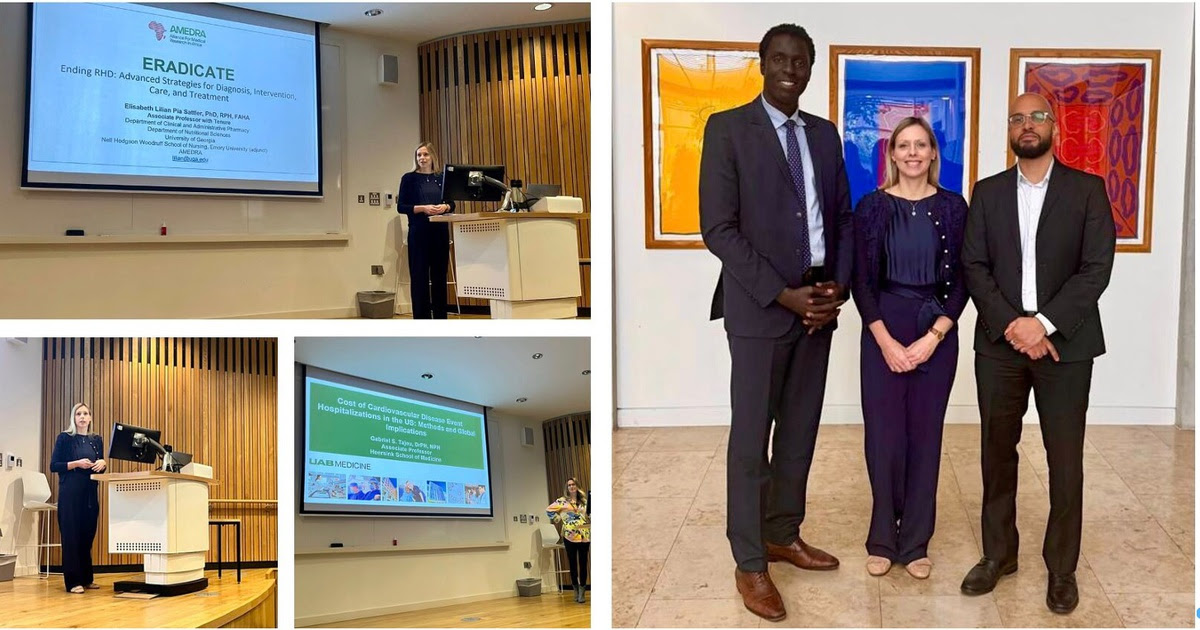
On June 15, AMedRA was proudly represented by Prof. Gabriel Tajeu, Prof. Lillian Sattler, and Prof. Bamba Gaye at the University of Oxford Nuffield Department of Medicine seminar titled “Global Data, Local Solutions: Improving Cardiometabolic Health in Africa.”
They spotlighted two major AMedRA-led initiatives:
- ASANDE – a continent-wide effort to collect high-quality data to drive the future of disease prevention in Africa.
- ERADICATE – a multi-country initiative targeting the elimination of rheumatic heart disease across the continent.
Also emphasized was the importance of consolidating African research efforts and bridging linguistic divides, especially for French-speaking scholars.
Prof Gaye rightly remarked “We’re just getting started. It’s been ten years of friendship, collaboration, shared fieldwork, and growing together.”
Special thanks to Africa Oxford Initiative, Kevin Marsh, Sarah Lewington, Hubert Lam, and all colleagues whose vision and energy continue to inspire hope.
Daouda Seck Joins CNTS as Director
We are pleased to share that Daouda Seck, MD, Msc, MPH , one of AMedRA’s earliest members, has been appointed Director of the Centre National de Transfusion Sanguine (CNTS) in Senegal. A medical doctor with a specialized Master’s in public health and expertise in project management, Dr. Seck assumed leadership of CNTS on August 4, 2025.

CNTS is the national reference institution responsible for implementing the government’s policy on blood transfusion. Its core missions include the collection, processing, and distribution of blood, the supervision of regional blood banks, and the care of patients with blood disorders.
In addition to its transfusion activities, the CNTS provides biological analysis services and operates a clinical hematology unit. The institution also plays a key role in training and research in the field of blood transfusion. Structured around three main units: the blood bank, the clinical hematology clinic, and a laboratory, the CNTS offers a comprehensive range of services to the public and health facilities.
CNTS plays a critical role in coordinating blood donation campaigns, operating advanced laboratories, and managing hematology services that underpin national transfusion capabilities. His new role positions him at the forefront of ensuring safe and efficient blood services, a vital public health endeavor.
Dr. Daouda Seck’s vision: ” Among my strategic priorities, I place strong emphasis on advancing research. Building on my active involvement with AMedRA, I intend to leverage this experience to strengthen and expand research within the CNTS. The promotion of voluntary blood donation, which is the Center’s primary mission, remains my highest priority, alongside reinforcing and positioning the laboratory as a regional reference in West Africa”
AMedRA wishes him a rewarding and impactful tenure.
Breaking Barriers to Global Science
In association with African Society for Médecine, AMedRA organised Webinar to discuss “Visa Apartheid”
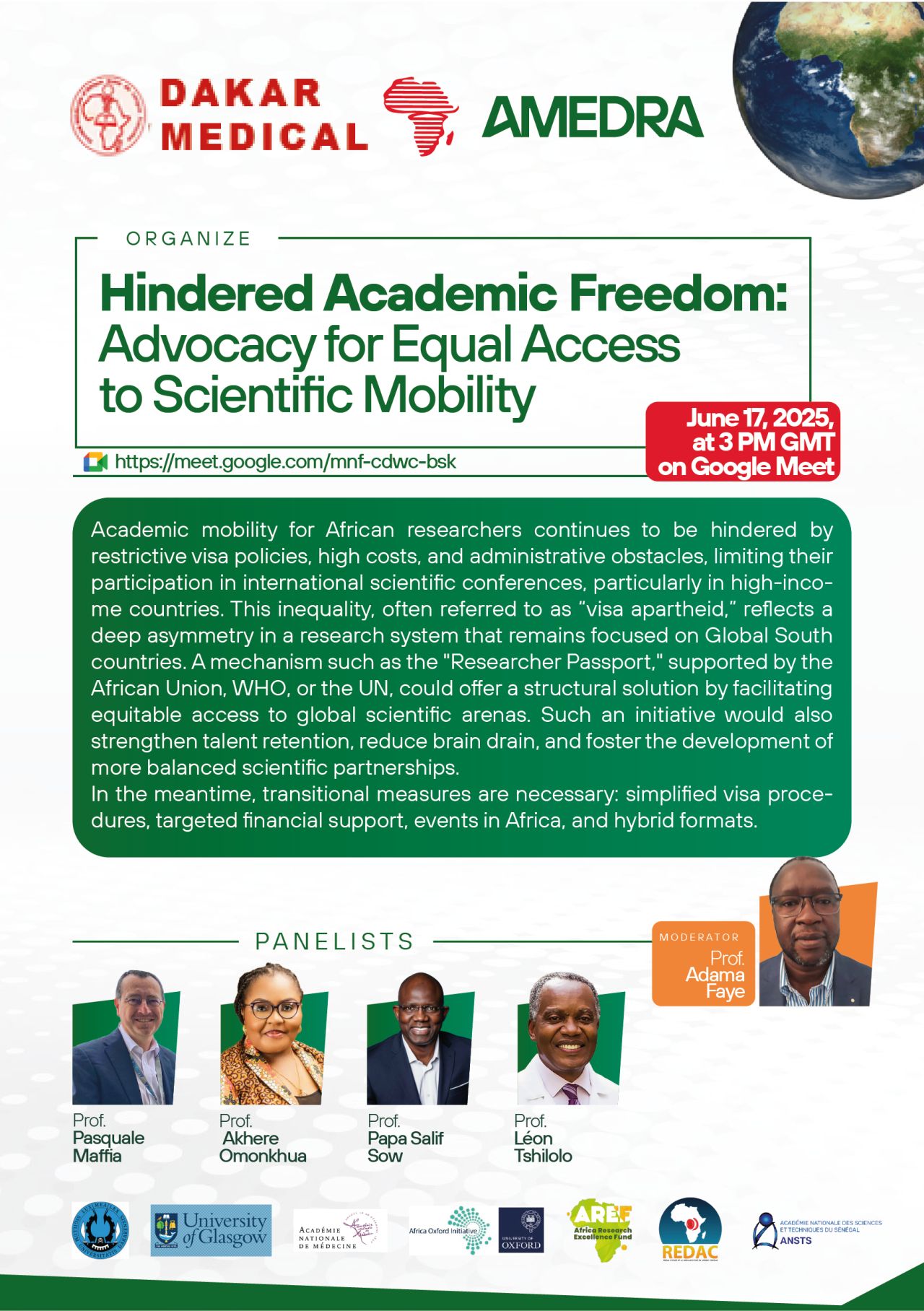
On June 17, in partnership with Dakar Medical, AMedRA hosted a webinar addressing the significant visa barriers faced by African researchers trying to participate in global scientific events. These restrictions contribute to exclusion and brain drain.
Key Proposal:
- A continent-wide AU-backed Researcher Passport to ease travel and collaboration for African scientists.
AMedRA continues to advocate for policies enabling African researchers to fully engage in global science.

Spotlight on International Partnerships
University of Pittsburgh – AMedRA Collaboration
In late June, the University Times (Pitt) featured AMedRA’s growing partnership with the University of Pittsburgh:
“Public Health professor channels Senegal trips into collaborative disease research.”
Prof. Tiffany Gary-Webb, Associate Director of the Pitt Center for African Studies, returned from a follow-up visit to Senegal in early June. Her work with AMedRA cardiologists aims to advance research on cardiovascular disease and diabetes in Senegal. This partnership continues to expand the impact of AMedRA’s mission to drive transformative health solutions rooted in African realities.
Read the University Times article ➔
In late June, the University Times (Pitt) featured AMedRA’s growing partnership with the University of Pittsburgh:
“Public Health professor channels Senegal trips into collaborative disease research.”
Prof. Tiffany Gary-Webb, Associate Director of the Pitt Center for African Studies, returned from a follow-up visit to Senegal in early June. Her work with AMedRA cardiologists aims to advance research on cardiovascular disease and diabetes in Senegal. This partnership continues to expand the impact of AMedRA’s mission to drive transformative health solutions rooted in African realities.
